
Why Are Polyurethane Screens The Ultimate Upgrade For Your Vibrating Screen?
Tired of weekly screen replacements? The constant downtime and labor costs drain your profits. There is a better way to keep your operation running without interruption.
Polyurethane screens offer a revolutionary upgrade. They boast 5-7 times the wear life of traditional metal screens, which dramatically reduces maintenance costs and production downtime. Their lightweight, self-cleaning design also boosts screening efficiency and simplifies installation, making them a highly cost-effective solution.

I talk to operators all the time, and the story is often the same. They are stuck in a cycle of repairing and replacing metal screens, losing valuable production hours every week. It’s a frustrating and expensive problem. But when I show them the numbers and the real-world results of switching to polyurethane, they start to see a clear path to better profitability and smoother operations. It’s not just about a new part; it’s about a new way of thinking about maintenance and efficiency. Let’s break down exactly how this simple change can make such a huge impact on your bottom line.
How Do Polyurethane Screens Actually Lower Your Total Operating Costs?
Worried about the higher initial price of polyurethane screens? Focusing only on the purchase price can be misleading. You have to consider the hidden costs of frequent replacements with cheaper metal screens.
Polyurethane screens lower total costs by lasting much longer than metal ones. This means far fewer replacements, minimal production downtime, and reduced labor expenses. The long-term savings on maintenance and lost production easily outweigh the higher initial investment, boosting your overall profitability.

Let's get into the specifics. I had a client in the mining sector who was replacing metal screen panels on their main vibrating screen almost every other week. The material was highly abrasive, and the impact was just too much for the metal to handle. He was focused on the low cost of each metal panel, but he didn't fully account for the true cost of using them. When we sat down and did the math, the picture became crystal clear.
The True Cost of Metal vs. Polyurethane
| Cost Factor | Traditional Metal Screen | Chaishang Polyurethane Screen |
|---|---|---|
| Lifespan | 1-4 weeks | 6-12 months |
| Replacements/Year | 12-52 times | 2-3 times |
| Downtime/Replacement | ~2 hours | ~1 hour |
| Annual Downtime | 24 - 104 hours | 2 - 3 hours |
| Labor Cost | High (frequent, heavy lifting) | Low (infrequent, lightweight) |
After switching, his team went from constant, reactive maintenance to just a couple of planned replacements per year. The reduction in downtime alone paid for the entire set of polyurethane screens within the first six months. This doesn't even count the savings on labor and the reduced stress on his maintenance crew. It’s a powerful example of how looking at the total cost of ownership, not just the sticker price, leads to a much smarter business decision.
Can Polyurethane Screens Really Improve Your Screening Quality and Throughput?
Are clogged screens and inconsistent particle sizes hurting your product quality? Material getting stuck, a problem known as blinding or pegging, slows down your entire process. A clean screen is essential for efficiency.
Yes, they absolutely can. The natural elasticity of polyurethane prevents material from blinding or pegging the screen holes. This self-cleaning action ensures consistent throughput and precise particle sizing, significantly improving the efficiency and quality of your final product without needing constant manual cleaning.
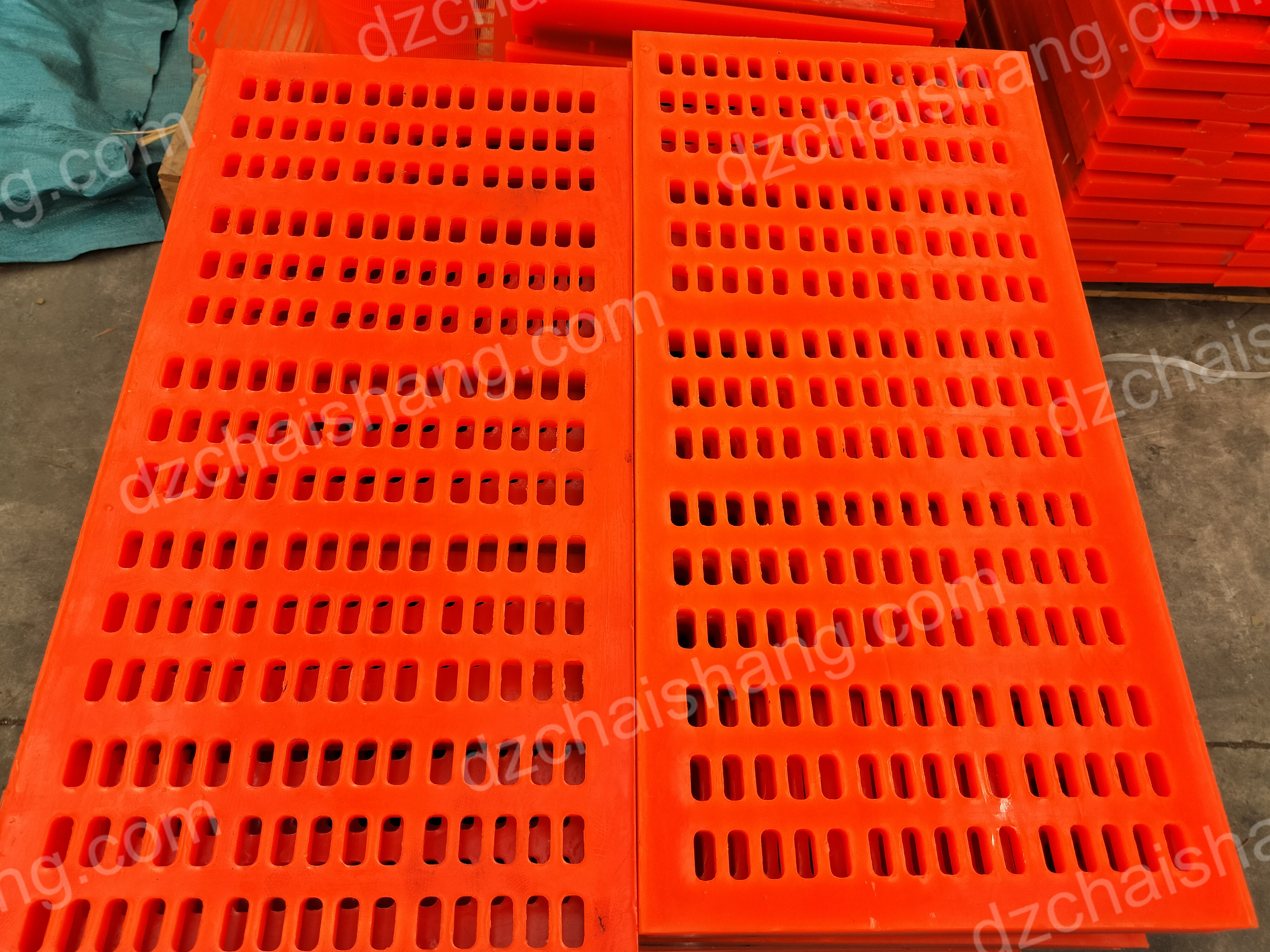
I remember visiting a sand and gravel plant where the operator was constantly fighting with his wet screening process. The fine, sticky particles would plug up his metal wire mesh in no time. His team had to stop the line to pressure wash the screens multiple times a day. This was a huge bottleneck. When you're trying to produce a specific grade of aggregate, inconsistent screening means you're not meeting spec, which leads to rejected material and wasted money.
How Elasticity Creates Efficiency
The magic of polyurethane is in its material properties.
- Self-Cleaning Action: The screen surface flexes slightly during operation. This constant, subtle movement is just enough to dislodge particles that would otherwise get stuck. The holes stay open, and the material keeps moving.
- Tapered Apertures: Many polyurethane screens are designed with tapered holes, which are slightly wider at the bottom than at the top. This design means that any particle that enters a hole is almost guaranteed to pass through, effectively eliminating pegging.
- Improved Work Environment: An added bonus is the noise reduction. Metal screens create a tremendous amount of noise. The dampening effect of polyurethane makes the plant a significantly quieter and safer place to work.
For that sand and gravel operator, the switch was a revelation. His throughput increased by over 20%, and the final product was consistently on-spec. The daily frustration of cleaning screens was gone, and his production line finally ran as it should.
Is It Difficult to Switch from Metal to Custom Polyurethane Screens?
Thinking about upgrading but worried about compatibility issues? You might fear that new polyurethane panels won't fit your existing equipment, and a poor fit can ruin performance. A perfect fit is crucial.
Switching is surprisingly easy and seamless. Polyurethane screens can be fully customized to your exact specifications, including dimensions, hole size, and fixing methods. They are also much lighter than metal, making installation faster, safer, and often a simple one-person job.

One of the biggest hesitations I hear from potential customers is the fear of a complicated changeover. They've used the same metal screens for years and assume anything different will require major modifications to their machinery. I always tell them that's the beauty of working with a manufacturer that specializes in OEM and ODM solutions. We don't sell a one-size-fits-all product; we create a solution that fits your machine perfectly.
Making the Switch Effortless
The process is straightforward. We can work from your existing screen drawings, or even just a sample of your old metal panel.
- Full Customization: We can match any detail you need. This includes the overall length and width, the thickness of the panel, the type of fixing system (tensioned hooks, bolt-down systems, etc.), and of course, the exact aperture size and shape required for your application.
- The Weight Advantage: This is a point that can't be overstated. A polyurethane panel can be up to 80% lighter than its steel equivalent.
| Screen Type | Average Panel Weight | Installation Requirement |
|---|---|---|
| Steel Screen Panel | ~100 kg (220 lbs) | Crane or 2-3 people |
| Polyurethane Panel | ~20 kg (44 lbs) | 1 person |
This difference is massive. It makes installation not only faster but also much safer for your crew. You reduce the risk of injuries associated with lifting heavy, awkward metal parts. I’ve seen maintenance teams cut their screen change-out time in half for this reason alone. The switch isn't a hassle; it's an immediate upgrade to your entire maintenance workflow.
Conclusion
Upgrading to polyurethane screens reduces costs, boosts efficiency, and simplifies maintenance. It is a smart, long-term investment for any serious mining or aggregate operation.